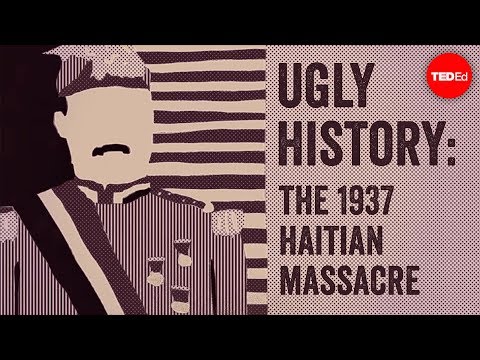
When historians talk about the atrocities of the 20th century, we often think of those that took place during and between the two World Wars. But two months before the Rape of Nanking in China, and a year before Kristallnacht in Germany, a horrific ethnic cleansing campaign occurred on an island between the Atlantic Ocean and Caribbean Sea. Edward Paulino details the 1937 Haitian
Massacre.
Seventy-five years ago, the border between Haiti and the Dominican Republic was the scene of a mass slaughter that has long burned in Haitians' collective memory but was either unknown or forgotten in the wider world.
It earned the name the Parsley Massacre because Dominican soldiers carried a sprig of parsley and would ask people suspected of being Haitian to pronounce the Spanish word for it: "perejil".
Those whose first language was Haitian Creole found it difficult to say it correctly, a mistake that could cost them their lives.
Historians estimate that anywhere between 9,000 and 20,000 Haitians were killed in the Dominican Republic on the orders of the Dominican dictator Rafael Trujillo.
Bodies were dumped in the Massacre River, ominously named after an earlier colonial struggle between the Spanish and French.
The killings of 1937 changed the relationship between the two countries on the island of Hispaniola and its effects can still be felt today.
Watch the video here:
What do you think about this. Let us know in the comments.
Comments